SUPPORT THE NEW TOURNEMIRE DOCUMENTARY
Produced by Fugue State Films.
Learn More Here
Tournemire and Franckianism: Hagiographic Awe or Eisegetical Myth? (Part One)

Introduction
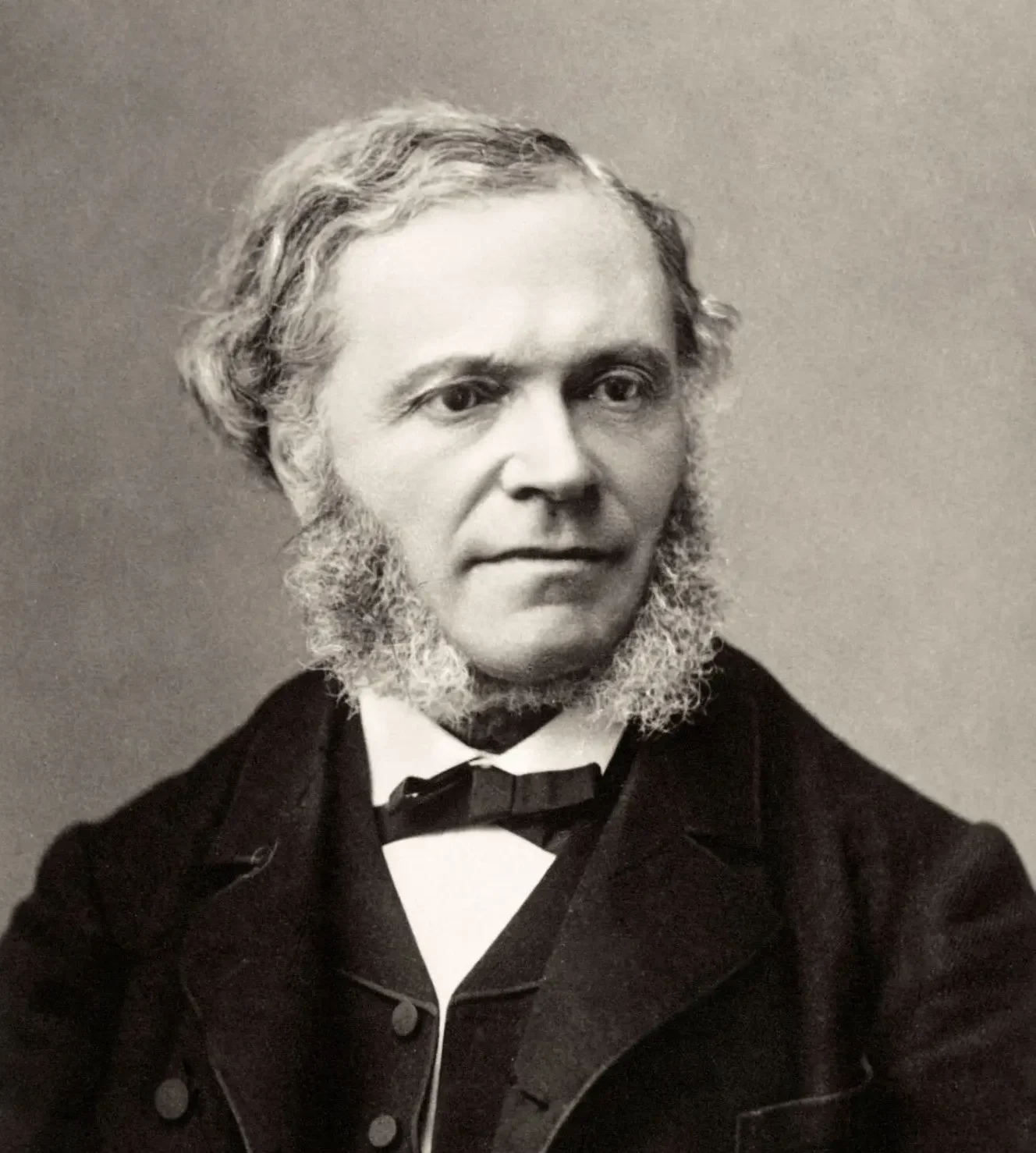
In the parochial and, many times, insular organ world, much has been written about César Franck (1822–1890). However, in his day, Franck was relegated to the periphery of the musical world, while, after his death, he was both mythologised by his disciples and dismissed by subsequent trends in musical taste.
The post hoc reframing of history in light of one’s own epistemological perspective is—to a certain degree—unavoidable. We all engage in historiographical emplotment where we employ both exegetical and eisegetical historiography. Although fraught, historiographical emplotment—when sagely applied—effectuates a kind of truth-telling that transcends the superficiality of mere facts. People living through contemporary events often move forward blind to their circumstances. So historiographical emplotment can be elucidating. Conversely, it can also be a rarefied means for a historian to legitimise their opinions and to frame their perception of their own lives—so the success or failure of this practice is dependent upon a historian’s ability to be an objective and transcendent empath versus being mired in their myopic subjectivity.
Franck was culturally wedded to nineteenth-century Romanticism and is the progenitor of what Robert Sutherland Lord (1930–2014) would later term The Sainte-Clotilde Tradition, which would be perpetuated by Franck’s two primary successors, Charles Tournemire (1870–1939) and Jean Langlais (1907–1991). [342–343] This musical tradition is in direct contradistinction to the neoclassical tradition espoused by Charles-Marie Widor (1844–1937) and Marcel Dupré (1886–1971), both of whom were heritors of the Jacques-Nicolas Lemmens (1823–1881) school, which was a reaction against Romanticism and which initiated the Bach renaissance. The Lemmens-Widor-Dupré neoclassical school would be the tradition that would prevail in pedagogical circles, and that tradition would attempt to impose its values and musical interpretation upon the Franck-Tournemire-Langlais Sainte-Clotilde Tradition.
Tournemire, in particular, believed himself to be the personification of Franckianism, and his 1931 book on César Franck defined his vision of Franckianism and how that vision was reified through his own musical exploits.
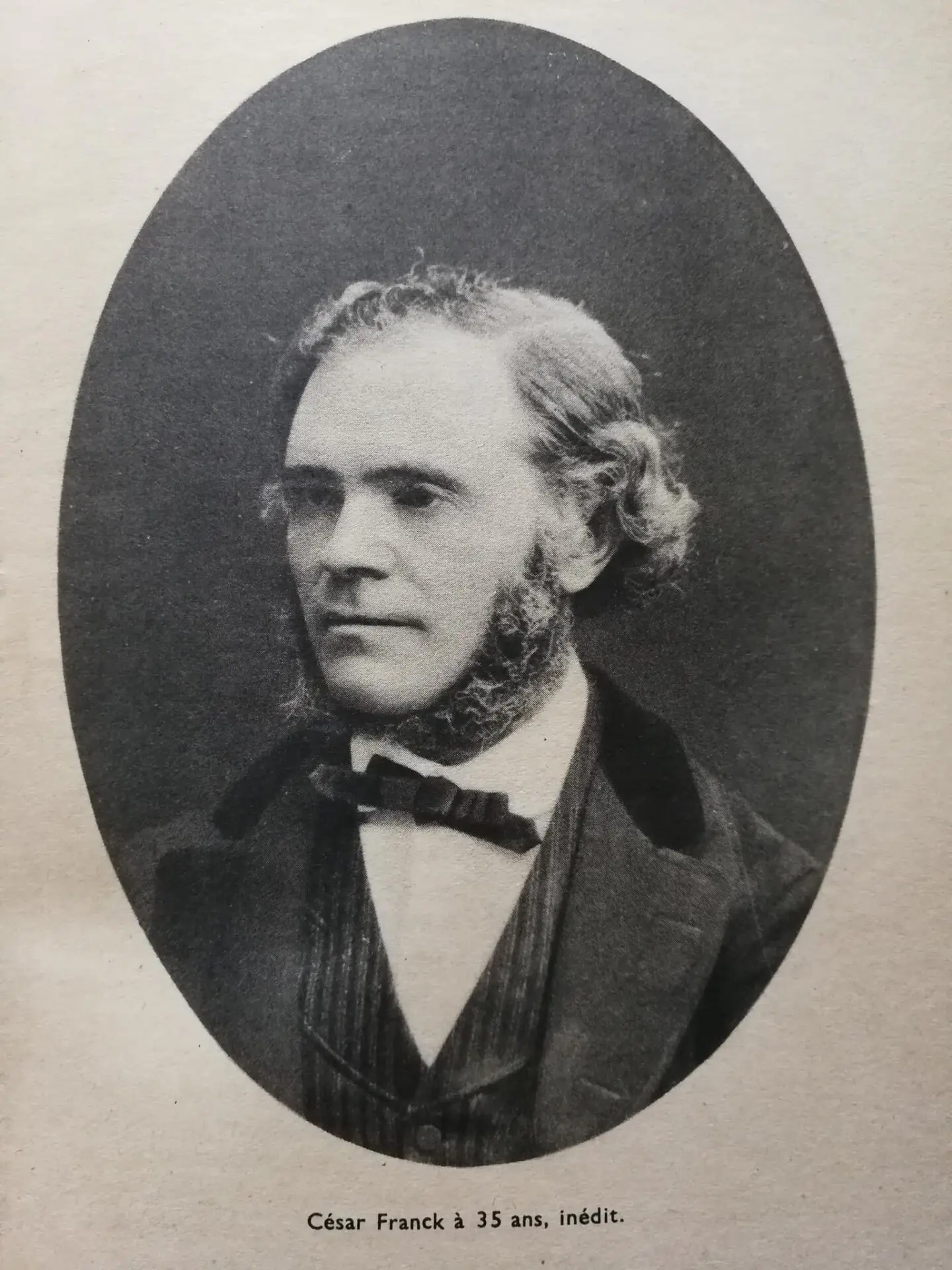
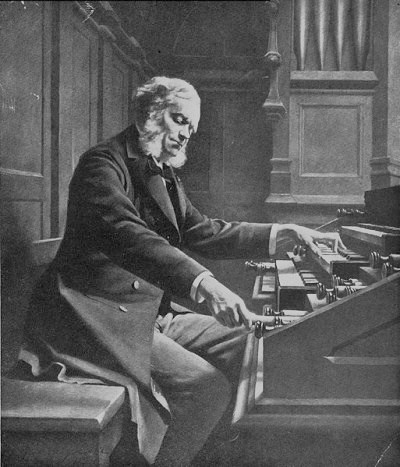
César Franck
La Bande à Franck and the Franckian Legend
Indeed, the love Franck held for his students perhaps inadvertently cultivated a return of devotion that bordered on divine worship among his students and followers, who would become known as La Bande à Franck. This coterie of apostles included people like Ernest Chausson (1855–1899), Henri Dallier (1849–1934), Henri Duparc (1848–1933), Louis Vierne (1870–1937), Gabriel Pierné (1863–1937), and, of course, Charles Tournemire. The only member of La Bande à Franck who could rival Tournemire in the avidity of his Franckianism was that of Vincent d’Indy (1851–1931), whose 1906 biography on César Franck set the early tenor of Franckian mythologising and whose Schola Cantorum (founded in 1894) would serve as an incubator of Franckian ideals.
Derepas’s account of César Franck and his music typified the Franckists’ perception of their maître and the language they used to express themselves:
The atmosphere in which Franck moves is illuminated by a very clear light and animated by a breath which is really that of life. His music makes us neither beast nor angel. Keeping a steady balance, as far removed from materialistic coarseness as from the hallucinations of a doubtful mysticism, it accepts humanity with all its positive joys and sorrows and uplifts it, without dizziness, to peace and serenity by revealing the sense of the Divine. Thus, it tends to contemplation rather than to ecstasy. The hearer who abandons himself with docility to its beneficent influence will recover from the superficial agitation at the centre of the soul and, with all that is best within himself, will return to the attraction of the supremely desirable, which is at the same time the supremely intelligible. Without ceasing to be human, he will find himself nearer to God. This music, which is truly as much the sister of prayer as of poetry, does not weaken or enervate us but rather restores to the soul, now led back to its first source, the grateful waters of emotion, of light, of impulse; it leads back to heaven and to the City of Rest. [65–66]
Charles Bordes (1863–1909) has suggested that the penchant of La Bande à Franck to apotheosise their maître may have led to recollections that were “an invention of his pupils”—especially with the passage of time—and that their post hoc reframed conceptualisation of Franck may have been merely an eidolon. [66] Indeed, hyperbole and simplification of narratives are common as events become transformed into history. The truth may be that Franck simply was a pious, loving person—one who was guileless without being mindlessly tractable—a luminary with a talent for profound beauty.
These differences of opinion notwithstanding, the Franckian Pater Seraphicus “myth” does seem to be a widely held and earnest assertion among the students of Franck, and this perspective ought not to be contemned outright. Franck’s faith was one of genuine sentiment, and he would be seen by his disciples as a kind, saintly figure who was in the world but not of it—a man of faith living in a laïc age of Romanticism whose genius was spurned by a vainglorious culture.
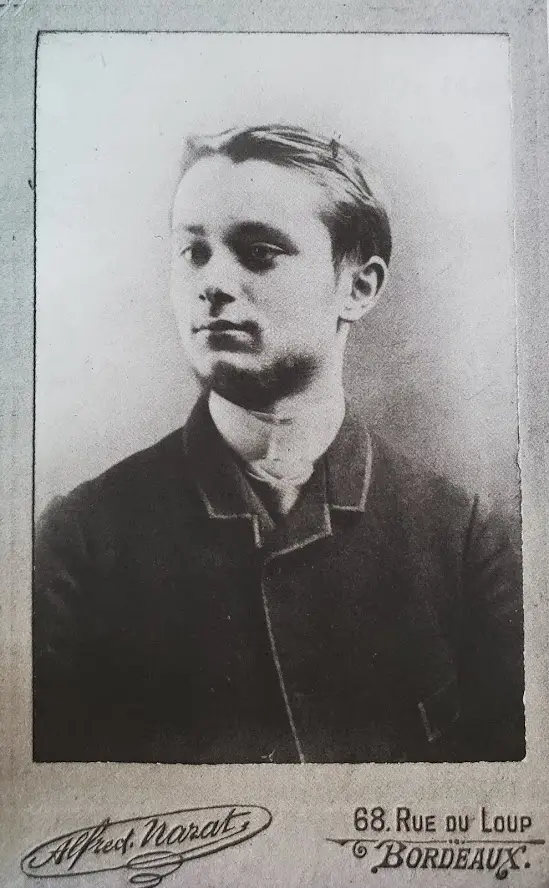
Charles Tournemire
The Young Tournemire and César Franck
In 1886, Tournemire moved to Paris, where he studied piano privately with Henri Fissot (1843–1896). The following year, he matriculated at the Paris Conservatoire, where he studied advanced piano with Charles de Bériot (1833–1914) and harmony with Antoine Taudou (1846–1925). However, he felt dissatisfied with the education he was receiving. Then, in 1889, Tournemire visited the church of Sainte-Clotilde, and from the very first moment that Tournemire encountered César Franck, he fell under the Franckian spell:
God was watching over me. On a Sunday in November, he mysteriously led me to Sainte-Clotilde. I walked into the basilica at the hour of Vespers. I neither knew of the church nor the name of the organist. God of heaven! When I heard the improvised verses of the Magnificat, I thought I saw the heavens open wide and a long procession of angels blue and roseate descending to earth. [48]
With his deep dissatisfaction with his education at the Paris Conservatoire weighing upon him, Tournemire went to call upon the mysterious organist of Sainte-Clotilde:
Disgusted with my two classes at the Conservatoire, I turned again to the great musician of Sainte-Clotilde. I had grown restless, having attended his church as a discreet listener. I decided to present myself to the Maître Séraphique. I went knocking at ninety-five boulevard Saint-Michel, his home. “A kind of barracks house in a current state of absolute disrepair… and soon to disappear!”
An old woman wearing a lace bonnet opened the door. It was Madame César Franck herself. The maître was away.
I returned the next day. I was introduced to the one for whom I had a secret admiration. With the volubility peculiar to Bordeaux—stupid people—I expressed my enthusiasm for his “great talent”. (?!) His eyes widened—if I had the maturity, I would have immediately realised that Franck was a “Great” whose contemporaries had organised terrible cruelty against, and who experienced the emptiness primarily found at the end of their wonderful life: Cervantes, Leonardo da Vinci, Shakespeare, and many others!
With that banal compliment which I gave—words from the mouth of a young man which he determined to be a reaction due to misfortune—he kissed me, hugged me, and said to me, “You love my improvisations?”
I leave it to those with a sensitive heart—intelligent men—to meditate on this tragically painful scene! With the warmth of such a welcome, there suddenly awoke in me—with his broad forehead and his extraordinarily moving eyes—respect, admiration, and confidence in this old man.
I went straight to the point. I told him my disappointment with the Conservatoire. His face became a bit harsh, probably expressing his apparent displeasure with the opinion that I expressed concerning my teachers avant la lettre.
Then he said, in a big, slightly cauldronesque voice, “You are not afraid of being considered a defector if, after I have examined you, I take you into my fold?”
The word “defector” was unknown to me. He explained. I answered, “I am so happy to work with you!” [48–49]
This meeting with Franck served as a defining metanoia for Tournemire. Of all the musicians cultivated by Franck, Tournemire was the unparagoned fruit of Franck’s endeavours. Vierne once remarked, “For rightly we considered Tournemire the eagle of the class!” [143] Franck instilled in Tournemire a sense of religious piety that would inform his musical outlook and vocational sensibilities.
Franck’s pedagogical emphasis also cultivated in Tournemire a love of originative musical endeavours versus mere repertoire performance. While Franck was assigned the role of Professor of Organ at the Paris Conservatoire, repertoire was secondary to improvisation, which also, by its very implications, incorporates music composition theories, and this educational emphasis instilled in Tournemire his “mission” as a composer. The General Secretary of the Conservatoire, Émile Réty (1833–1915), decried, “We have hired a Professor of Organ who allows himself to make the organ class into a composition class!” [55] Even Tournemire confirmed the centrality of composition in the organ class but more in praise than condemnation:
For two years, I had the immeasurably precious privilege of participating in his organ class—a veritable centre of composition studies. There were three weekly meetings of this marvellous class, and in addition, the private lesson enabled me to retain from his luminous teaching as much as a young mind is capable of. [55]
As d’Indy would relate, beyond his pedagogical approach, of particular note was César Franck’s warmth as a human being, which engendered within his students respect, allegiance, and genuine love:
Untiring assiduity in work, modesty, a fine artistic conscientiousness—these were the salient features in Franck’s character. But he had yet another quality—a rare one—namely, goodness: a goodness that was serene and indulgent. [55]
Tournemire and Franck exhibited an immediate simpatico. Louis Vierne described his observations of the situation:
Tournemire had won the first accessit for that year. A born improviser, he already displayed a strong personality, and we, the young who were present at that semi-public session when the tournament was being disputed, captivated by the harmonies he discovered for the free theme, felt that he should have had the prize, but the jury preferred the more discreet Mademoiselle Prestat. When Franck came upon an independent nature among his pupils, a real temperament, he was delighted and did nothing to curb its expansion. Therefore, he was very fond of Tournemire. “Come now, brighten up the class for us with a pretty free theme,” he said to him on Saturday, the eighteenth of October, at the end of a class in which we had all floundered about pretty much. The request was heeded, for Tournemire improvised in a charming fashion upon a very simple theme in A-minor, almost a folk-theme, which he developed to an astonishing degree. [143]
However, Tournemire’s encounter with Franck would be brief. In the spring of 1890, Franck was struck by the pole of an omnibus. He neglected his health over the following summer, resulting in complications, including Pericarditis, which is an inflammation of the sac surrounding the heart. Franck died on the eighth of November 1890, thereby cementing Tournemire’s memory of César Franck at a pivotal and formative period in his life, and while the maître’s death grieved all of his students, Tournemire, in particular, was left inconsolable:
I lost not only a great maître but a father too! The day after his death, a Sunday, I accomplished my task as an organist. (I had been stowed away by my maître at Saint-Médard in Paris). What an Office! With eyes bathed in tears, I could not read the texts of the day! Groaning improvisations spread through the nave! It was extra-liturgical, of course. The gentlemen of the clergy were almost always unable to comprehend; the maître de chapelle, who as a general rule was willfully ignorant, noticed nothing abnormal. Thus, I could savour, if I may say so, the voluptuous distress of the heart, as one does at age twenty! [67]
It was inevitable that, with Franck’s death, a change was to come for the young Tournemire—a change that would horrify the impressionable student and shape the rest of his life.

Charles-Marie Widor
Tournemire’s Enmity towards Widor
Tournemire’s veneration of Franck only further ossified with the appointment of Charles-Marie Widor as Professor of Organ. Widor, who was a scion of the Lemmens neo-classical Tradition, openly denigrated Franck’s musical approach. Vierne vividly remembered Widor’s opening remarks upon his succession to the Conservatoire Organ Chair: “In France, we greatly favour improvisation over execution. This is more than a mistake. It is nonsense!” [68] Indeed, Lemmens, Widor’s teacher, looked with grave scepticism upon improvisation. His views were shared by François-Joseph Fétis (1784–1871), who boldly remarked:
Improvisation will never yield music of any value because there can be in it neither plan nor connection of ideas nor progressive development of a principal and dominant phrase. In reality, on an instrument which offers as many difficulties as the organ, there are no real improvisations: what are given as such are composed only of reminiscences, of well or badly-adjusted scraps and of prepared effects. [68]
Widor shifted the class’s focus to keyboard technique and repertoire. His pedagogical point of departure served as a reaction against Romanticism and, by extension, the Franckian school of thought. Immediately, Widor had the classification of the organ class at the Conservatoire changed in 1892 from “Harmony, Composition, and Organ” to “Keyboard Instruments and Harp”, indicating his divergent approach from Franck.
The organist Ennemond Trillat (1890–1980) claimed Widor had put Franck’s Trois chorals “on the blacklist”, and in general, Widor tended to teach only the works of Bach and later his own symphonies in an attempt to sever the ties to the Franckian tradition. [69] Widor’s musical pedagogy would celebrate the sobriety of form and structure and would express a classical ideal that served as a counter-argument to the degenerative musical language to which Romanticism had fallen victim. Upon his appointment, Widor asserted his philosophy:
I shall cite only that incomparable miracle, which is the organ works of Bach, the greatest musician of all time. Now, to interpret Bach’s work in its absolute integrity, it is necessary to have the technique that I am talking about. It must be scientific, rational, and non-empirical. The organ is the most mathematical of instruments. It alone sustains a sound with the same intensity as long as the finger or the foot presses on the key that produces it. The fact that the duration of the sound can be strictly controlled obliges one to make use of a certain number of skills in fingering, which I shall show you as the need arises. I hesitated a long time before accepting the position that falls to me today. I finally decided to do it with the determination to restore the level of organ performance in general and to revive the authentic tradition in the interpretation of Bach’s works in particular. It was bequeathed to me by my teacher Lemmens, who had it from Heße of Breslau, who had received it from Forkel, the pupil and biographer of the old Cantor. [68]
Coming at a formative and emotional time for Tournemire, the loathing of Widor by Tournemire became vivid and visceral, and this hatred between them would come to haunt Tournemire later in life:
Two months after this catastrophic event, Ambroise Thomas, a musician on the sidelines of music, had the idea of preferring Charles-Marie Widor to Alexandre Guilmant as the successor of the “musician of the angels”. I will never forget arriving on tiptoe, like a dancer in a “tutu”, in expectation of the new teacher of the organ class. His cavalier air, his receding forehead, his long neck, the whole appearance approaching “an egg placed on an egg cup”, a jacket in the colours of the premier “faiseur” of the time, hiding only a small part of the buttocks, a vest and pants ad hoc, immediately made him an intolerable character to me. The composer of Les Béatitudes had just been succeeded by the composer of the Korrigane, a ballet for the use of depraved subscribers of the Opéra.
What shocked me most was this man’s lack of conscionability and the levity with which he took possession of the illustrious chair [pulpit]! As we will see by what will follow, in a glance, I saw a mathematical precision. He had inquired of the administration of the Conservatoire concerning each one of us. He learned that I was to be the head of the class and, therefore, the bête à concours that could do him honour in the final examination at the end of the year.
The first contact between the new maître and me was disastrous! The words “Aquatic Music”, which he said of my first free improvisation, sounded outrageous to me. I remember my riposte as if it were yesterday: “Aquatic Music? Do you not know that what you heard is a reflection of the wonderful teaching of César Franck, my maître….”
There followed a chill that degenerated on the part of Charles-Marie Widor into a profound and absurdly enduring hatred with regard to me.
For six months, there was incessant conflict, always centring around intolerable criticism of Franck’s Trois chorals, including: “These works are poorly written for the organ: the pedal part is non-existent.” All I sought to retain of those six months with the organist of Saint-Sulpice was his formidable technique. We know that Widor was the brightest student of Lemmens. Having the faculty of teaching, he quickly reorganised the class from the sole point of view of execution. It would be ungrateful of me not to admit it here, and it would be a huge injustice. [71–72]
However, in the short term, rising above the odium, Tournemire was able to use the regimen and discipline Widor fostered to his advantage. Tournemire, as the most talented organist at the Conservatoire at that time, served as Widor’s assistant at Saint-Sulpice. In the summer of 1891, it was time for examinations. Vierne related:
When the June examination came around for admission to the competition, we had made definite progress, and six of us were allowed to attempt the famed ordeal in July. The best prepared without question was Tournemire. Without losing any of the fertility of his imagination as an improviser, he had entirely reformed his technique and had become a splendid virtuoso of the keyboard. [73]
Tournemire won the first prize in organ that year, thereby rescuing himself from the foreboding shadow of Widor. Tournemire recollected:
The hour of moral punishment having come to an end—the musical aspect allotted for me—in July 1891, I was freed from the organ class by obtaining the first prize for organ and improvisation, where I was awarded by ten out of eleven votes. The failing voice was the manifestation of a personal vendetta of a postulant ousted during the vacancy of the Chair of the Organ Class as an act of vengeance directed against Widor, the lucky competitor to the succession of Franck. This very ugly gesture raised the indignation of Ambroise Thomas, who, protesting energetically, decried the injustice. (Widor himself told me of that.) [73]
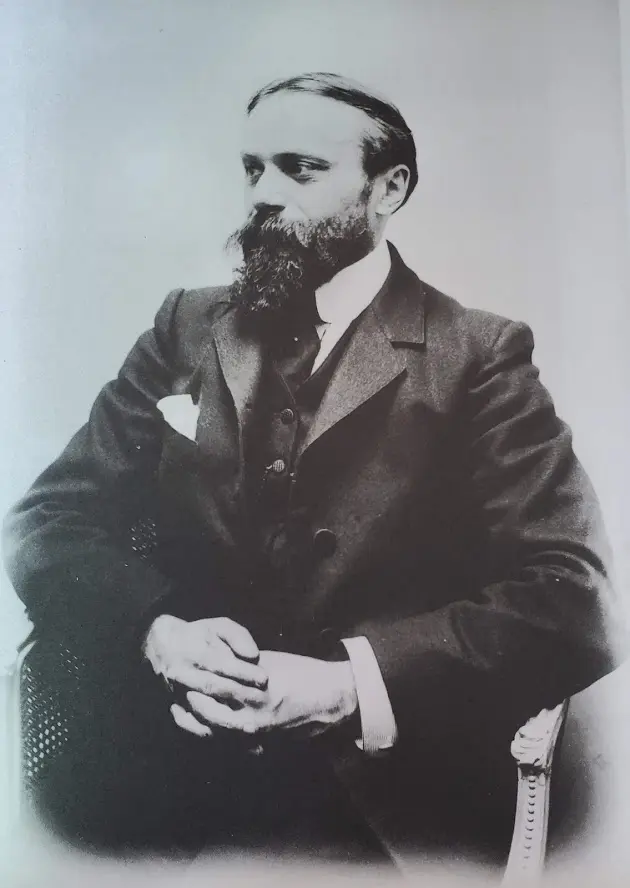
Charles Tournemire
The Myth of Franck and the Birth of Tournemire
Through the myth of Franck, we see the birth of Tournemire. Tournemire would fulfil his destiny when he acquired the coveted organ bench of Sainte-Clotilde from Gabriel Pierné in April of 1898—but it was not a destiny won without contention. Thirty candidates vied for the post. In the final examination, Tournemire and Henri Libert (1869–1937) of Saint-Denis were to face the jury, which included Samuel Rousseau (1853–1904), who was the maître de chapelle of Sainte-Clotilde (1888–1904), along with d’Indy and Widor. During the deliberations, Widor extended a meddling hand into the situation that threatened Tournemire’s appointment and, by extension, threatened the Franckian legacy:
An important event took place in April 1898: my appointment as organist of the grand orgue of the Basilica of Sainte-Clotilde in Paris. After a brief and indirect passage to this tribune via Gabriel Pierné, I became the true successor of my maître César Franck. Thirty competitors opposed me—including Henri Libert and Henri Büsser—many of whom held first prize organ awards from the Conservatoire. Charles-Marie von Widor made a fierce campaign against me. In my heart, I maintained my stalwart attitude towards him, an attitude I mentioned earlier in our reports concerning the Conservatoire organ class. He even visited the pastor of the Basilica of Sainte-Clotilde, Monsignor Gardey—an eminent man of whom I have kept a fond memory—and informed him that if he took me as his organist, he would find me extremely difficult: I was afflicted with a bad character, an intolerable prospect, therefore. Monsignor Gardey found his approach unworthy and tendentious. He took no account of it. He called me without hesitation to the envied position. We lived for fifteen years in perfect harmony. The death of this great priest, a disciple of Bossuet, grieved me greatly.
It would be unfair not to mention here Samuel-Rousseau, maître de chapelle of Sainte-Clotilde at this time. I owe him a lively recognition for his support and touching confraternity. So I officially became “someone”. [75]
Tournemire would retain this post at Sainte-Clotilde until his death in 1939. His early combative interactions with Widor also would set Tournemire on a musical path that would be in direct contradistinction to Widor’s musical leanings, and these contrasting individuals would shape the rest of his life.
A version of this essay will be appearing in Organists’ Review Magazine in 2027. Bracketed page citations are from Charles Tournemire’s L’Orgue Mystique: La Haute Mission, published by The Leupold Foundation.
Support the Tournemire Film Documentary
Learn how you can support the film documentary on Charles Tournemire produced by the award-winning Fugue State Films. This landmark project will feature scholars and performers from around the world as they delve into the fascinating life and times of Charles Tournemire and his musical masterpieces.
Bibliography
A. F. “César Franck by Charles Tournemire.” The Musical Times, volume lxxij, number 1,063 (1 September 1931): 800–801.
Bannister, Peter. “Charles Tournemire and the ‘Bureau of Eschatology’.” Mystic Modern: The Music, Thought, and Legacy of Charles Tournemire. Edited by Jennifer Donelson and Stephen Schloesser. Richmond: Church Music Association of America, 2014.
Chaitow, Sasha. Symbolist Art and the French Occult Revival: The Esoteric-Aesthetic Vision of Sâr Péladan. Paper presented at the Third ESSWE Conference, Lux in Tenebris: The Visual and the Symbolic in Western Esotericism, 2011.
D’Indy, Vincent. César Franck. Translated by Rosa Newmarch. London: The Bodley Head John Lane, 1910.
Davies, Laurence. César Franck and His Circle. Boston: Houghton Mifflin Company, 1970.
Ianco, Pascal. Charles Tournemire, ou Le Mythe de Tristan. Genève: Papillon, 2001.
Kneeream, Ralph James, Jr. A Translation/Edition of Charles Tournemire’s “César Franck.” A dissertation submitted in partial fulfilment of the requirements for the degree of Doctor of Music, Northwestern University, October 1983.
Kunel, Maurice. César Franck: L’homme et son œuvre. Paris: Bernard Grasset, 1947.
Leblanc, Jean-Marc. “Mémoires de Charles Tournemire Édition critique.” L’Orgue: Bulletin des Amis de l’Orgue, volume 2018: i–iv, number 321–324 (October 2019).
Lord, Robert Sutherland. “The Sainte-Clotilde Tradition.” The American Organist (February 1982): 38–40.
Near, John R. Widor, A Life beyond the Toccata. Rochester: University of Rochester, 2011.
Pfleger, Karl. Wrestlers with Christ. Translated by E. I. Watkin. Freeport, New York: Books for Libraries Press, 1936.
Schloesser, Stephen. Jazz Age Catholicism: Mystic Modernism in Postwar Paris, 1919–1933. Toronto: University of Toronto Press, 2005.
Smith, Rollin. Louis Vierne: Organist of Notre-Dame Cathedral. Hillsdale, New York: Pendragon Press, 1998.
Spotts, Richard Christopher. Charles Tournemire’s L’Orgue Mystique: La Haute Mission. Colfax, North Carolina: The Leupold Foundation, 2024.
Stove, Robert James. César Franck: His Life and Times. Plymouth, England: Scarecrow Press, 2012.
Tournemire, Charles. César Franck (Les Grands musiciens par les maîtres d’aujourd’hui). Paris: Librairie Delagrave, 1931.
Tournemire, Charles. Mémoires (1886–1939). Manuscript, 1939.
Van Wye, Benjamin. The Influence of the Plainsong Restoration on the Growth and Development of the Modern French Liturgical Organ School. Doctor of Musical Arts dissertation, University of Illinois, 1970.
Vierne, Louis. “Memoirs of Louis Vierne; His Life and Contacts with Famous Men.” The Diapason (October 1938): 10–13.
Vierne, Louis. Mes souvenirs. An annotated translation by Jack Reed Crawford. A thesis presented in candidacy for the Degree of Doctor of Philosophy, University of Miami, 1973.
Weidner, Raymond. The Improvisational Techniques of Charles Tournemire as Extracted from his Five Reconstructed Organ Improvisations. A dissertation submitted in partial fulfilment of the requirements for the degree of Doctor of Philosophy, Michigan State University, 1984.