SUPPORT THE NEW TOURNEMIRE DOCUMENTARY
Produced by Fugue State Films.
Learn More Here
4: Laïcism and the Religious Response


In 1894, inspired by the work of Solesmes, Charles Bordes, Alexandre Guilmant, and Vincent d’Indy founded the Schola Cantorum, a society established to rival the Conservatoire devoted to the performance of plainchant according to the Gregorian tradition and that enjoined the creation of modern liturgical music. Born of the Bande à Franck, the Schola had four goals: The return to the Gregorian tradition of plainchant; the restoration of Renaissance polyphony (in particular that epitomised by Palestrina); the creation of modern choral music that pays homage to Gregorian Plainsong and Renaissance polyphony, and that, most importantly, respects the Liturgy; and finally, the improvement of organ repertoire that it may be more rightly idoneous for the Church. Indeed, the Schola marked the dawn of modern musicology, looking to the antecedents of the Enlightenment for musical wisdom to incorporate into the modern age.
Such opinions did not go without sparking heated vituperation emanating from the famously self-aggrandising and pugnacious French cultural élite whose laïcistic ire was especially fomented in light of the tensions found in the broader political arena. Societally, antagonism toward the Church reached an apogee after 1900 when, as a result of the frenzied vitriolic Republican fervour ignited by the Dreyfus Affair cause célèbre, the government enacted an array of anti-clerical legislative decrees asserting laïcistic cultural hegemony eviscerating the Church through the confiscation of Church property and closing of schools, plus the deracinating of monasteries such as Solesmes.
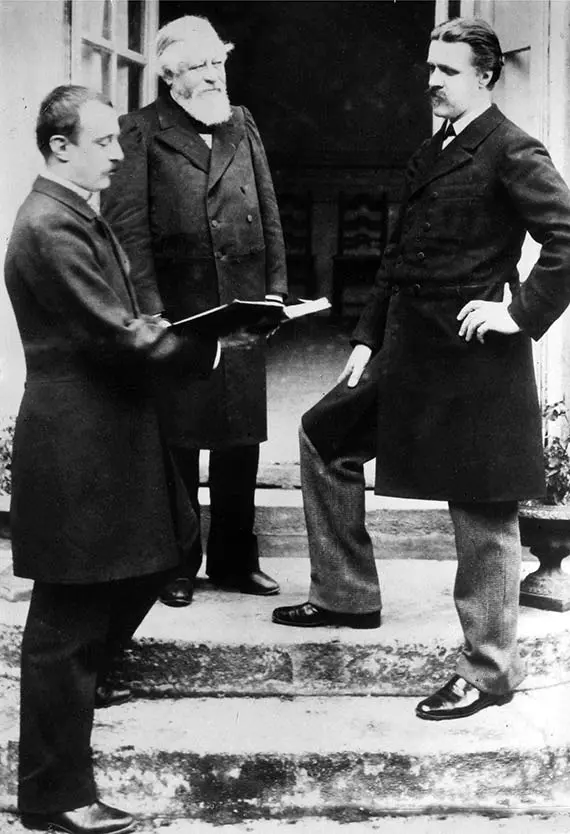
Bordes, Guilmant, and D’Indy
The French Premier René Viviani would declare, “We have extinguished in the firmament lights that will never be rekindled.” Not one to sit idly by, the Church tried to reassert its influence in French society. Musically speaking within that wider context, Pope Pius X issued a letter motu proprio in 1903 called Tra le sollecitudini endorsing the work of the Schola and Solesmes:
Sacred music should consequently possess, in the highest degree, the qualities proper to the Liturgy, and in particular, sanctity and goodness of form, which will spontaneously produce the final quality of universality. It must be holy and must, therefore, exclude all profanity, not only in itself but in the manner in which it is presented by those who execute it. It must be true art, for otherwise, it will be impossible for it to exercise on the minds of those who listen to it that efficacy which the Church aims at obtaining in admitting into her Liturgy the art of musical sounds. But it must, at the same time, be universal in the sense that while every nation is permitted to admit into its ecclesiastical compositions those special forms which may be said to constitute its native music, still these forms must be subordinated in such a manner to the general characteristics of sacred music that nobody of any nation may receive an impression other than good on hearing them. These qualities are to be found, in the highest degree, in Gregorian Chant, which is, consequently, the chant proper to the Roman Church, the only chant she has inherited from the ancient fathers, which she has jealously guarded for centuries in her liturgical codices, which she directly proposes to the faithful as her own, which she prescribes exclusively for some parts of the Liturgy, and which the most recent studies have so happily restored to their integrity and purity.
After the Great War, France mollified its harsher laïcist decrees as the Church was called upon to entomb the nation’s one-and-a-third million war-dead. A philosophical palingenesis initiated by the war occurred—a renouveau catholique. Musically speaking, within the context of that ameliorative climate, Cardinal Dubois of Paris gave his official approbation for the use of the 1904 Liber Usualis, and the Institut grégorien was founded. Then, in 1922, the monks of Solesmes were welcomed back to France, affording them the opportunity to promulgate their notions further.
Video: Choral alléluiatique nº I by Charles Tournemire